
Looking Beyond the Behaviour: Understanding Anger in Children
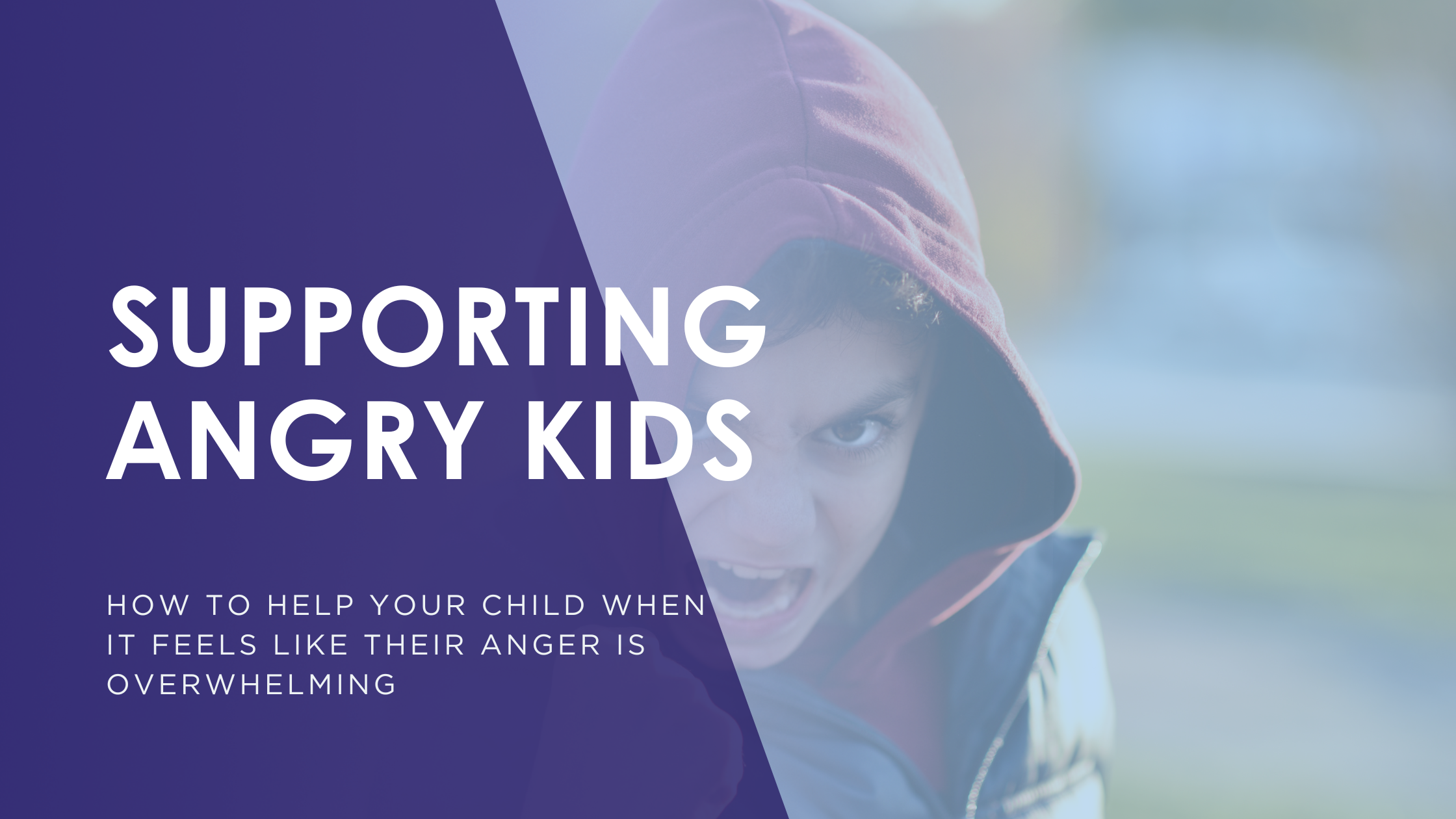
What if anger isn't something to fix, but a sign that your child is struggling with something they don't yet have the words or skills to express?
"How do I stop my child’s angry outbursts?" It's a question many parents find themselves asking when emotions are running high and nothing they seem to say or do is helping.
When children become angry, our attention is naturally drawn to the behaviour we can see. The shouting, arguing, door-slamming or hurtful words can leave us feeling frustrated, worried or unsure how best to respond.
We may find ourselves becoming caught up in the behaviour we can see, desperately wanting the shouting, arguing or outburst to stop. As our own emotions rise, we might raise our voices, become more directive, or search for something to say or do that will stop the behaviour in its tracks and help our child understand that it can't continue.
These responses are understandable. When emotions are running high, it can be difficult to see beyond the behaviour in front of us.
But what if anger isn't the real problem?
What if the anger we see is a sign that our child is struggling with something underneath?
When we begin to view anger through this lens, it can shift not only how we respond to our children, but how we understand what's happening in those difficult moments.
Anger Is Often a Signal
Anger is one of the emotions we notice most easily. It can be loud, intense and difficult to ignore. When our child is shouting, arguing or lashing out, it's understandable that our attention becomes focused on stopping what is happening in front of us.
Yet anger is often only part of the story.
Like the tip of an iceberg, anger may be the emotion we can see, while other feelings remain hidden beneath the surface. Underneath we might find disappointment, anxiety, embarrassment, sadness, fear, confusion, frustration or overwhelm.
Of course, in the middle of an outburst, we don't always know exactly what is driving our child's behaviour. We don't need to become detectives or analyse every reaction. What can help is simply holding in mind the possibility that our child may be struggling rather than deliberately trying to make life difficult.
This small shift can lead us to ask a different question:
"My child is struggling with something right now. What do they need from me?"
What Does My Child Need From Me Right Now?
When our children are angry or overwhelmed, our first instinct is often to focus on stopping the behaviour. Yet if we pause and ask what our child needs from us in that moment, the answer may be surprisingly different.
In the middle of a storm, children rarely need a lecture, a consequence or a discussion about better choices. Those things may have their place, but they are often most effective once emotions have settled. What children frequently need in these moments is our presence, our calm and our understanding. They need someone who can stay alongside them when their emotions feel too big to manage on their own.
This process is often referred to as co-regulation. It is not about fixing feelings, removing difficult emotions or rescuing children from distress. Rather, it is about helping them feel safe enough for those emotions to settle. Sometimes that might mean listening. Sometimes it might mean sitting quietly nearby. Sometimes it might simply mean responding with a calm voice when everything in us wants to react.
Of course, this isn't always easy. When our children are shouting, arguing or lashing out, we may notice our own thoughts pulling us in a different direction.
"I'm rewarding bad behaviour."
"They need to learn this isn't acceptable."
"What will other people think?"
"If I'm understanding, am I letting them get away with it?"
These thoughts are understandable. Many parents experience them from time to time. Yet while these concerns may matter, the middle of an emotional storm is often not the moment when learning, reflection or problem-solving can take place.
In that moment, our child may need something different from us. They may need our compassion when they are overwhelmed. Our strength when they are struggling to stay in control. Our understanding when they cannot yet find the words to explain what is happening for them. Not because the behaviour doesn't matter, but because the relationship matters too.
When the Storm Has Passed
Looking beyond children’s behaviour does not mean ignoring behaviour. Boundaries still matter. Learning still matters. Accountability still matters. The difference is recognising that there is a time for connection and a time for reflection.
Once emotions have settled, there is often much more opportunity to explore what happened, talk about alternative ways of coping, build skills, repair relationships and put supports in place for the future.
The goal is not to raise a child who never feels angry. Anger is a normal part of being human. Rather, we can help our children learn how to recognise those feelings, understand them and navigate them in ways that are helpful to themselves and those around them. The storm itself is rarely the best classroom. More often, learning happens afterwards, when children are calm enough to reflect, listen and engage with support. When the storm passes we will have space for learning about emotional regulation and helping children manage their anger.
A Final Thought
The next time your child's anger takes centre stage, see if you can pause before asking:
"How do I stop this?"
And instead wonder:
"What does my child need from me right now?"
The answer won't always be obvious, and it won't always be easy. Sometimes what they need most is our compassion when they are overwhelmed, our strength when emotions are running high, and our understanding while they find their way through the storm. There will be time later for learning, problem-solving and building skills for the future.
For now, perhaps the most important question is not how to stop the storm, but how we want to show up within it.
Looking for Extra Support?
Supporting children through big emotions can feel challenging, especially when we're navigating our own emotions at the same time. At Calm Tides Wellbeing, we offer workshops, training and specialist support for individuals, organisations and communities. If you'd like to learn more, explore our services or get in touch.